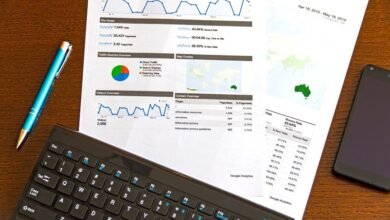
Pulse Beacon integrates diverse urban data streams—sensors, cameras, and mobile signals—into a single, time-synced feed. Its fusion algorithms emphasize cross-checks and trend-aware analytics to map mobility patterns with privacy protections through de-identification and strict access controls. Real-time insights support commuters, planners, and transit agencies, while governance and interoperability standards enable scalable deployment. The approach is precise, but questions remain about adoption barriers and long-term resilience as cities evolve.
How Pulse Beacon Transforms Urban Traffic Data
Pulse Beacon transforms urban traffic data by aggregating diverse streams—sensors, cameras, and mobile signals—into a unified, high-resolution feed.
The system emphasizes data accuracy through robust fusion algorithms, cross-checks, and time-synchronized sampling.


It maps patterns with trend-aware analytics while preserving operational flexibility.
Privacy implications are mitigated via de-identification and access controls, ensuring transparent, accountable data handling for stakeholders seeking freedom and clarity.
Real-World Impacts: Commuters, Planners, and Transit Agencies
The integration of Pulse Beacon’s unified traffic feed yields measurable effects for commuters, planners, and transit agencies by translating multi-source data into actionable mobility insights. Data privacy remains a guiding constraint while efficiency gains inform funding models and budget decisions. Real-time trends support informed routing choices, long-range planning, and performance benchmarks, enabling resilient, adaptable systems that respect user autonomy and public accountability.
How to Evaluate or Adopt Traffic Tracker 5128557729 Pulse Beacon
Evaluating or adopting Traffic Tracker 5128557729 Pulse Beacon involves a structured appraisal of data inputs, interoperability, and governance frameworks.
The assessment emphasizes pulse beacon performance, data reliability benchmarks, and transparent sourcing.
Stakeholders compare integration timelines, vendor support, and privacy safeguards.
Trends indicate increasing reliability with standardized interfaces, while risk manifests in data gaps; disciplined governance sustains freedom to adapt and reallocate resources.
Conclusion
Pulse Beacon integrates heterogeneous urban data sources into a synchronized, analyzable stream, enabling precise traffic insights while preserving privacy through de-identification and robust governance. Its fusion algorithms cross-verify signals, reducing noise and exposing clear mobility patterns. Real-time and trend-aware analytics support commuters, planners, and transit agencies in optimized routing and long-term infrastructure decisions. As accuracy compounds, stakeholders should proceed methodically: “measure twice, cut once” to ensure scalable, interoperable deployment and sustained resilience.