Phone Number Verification Insights: 2915209004, 685119756, 910684059, 910780135, 681197425, 968191838, 944341070, 63030301999027, 654731470 & 946134900

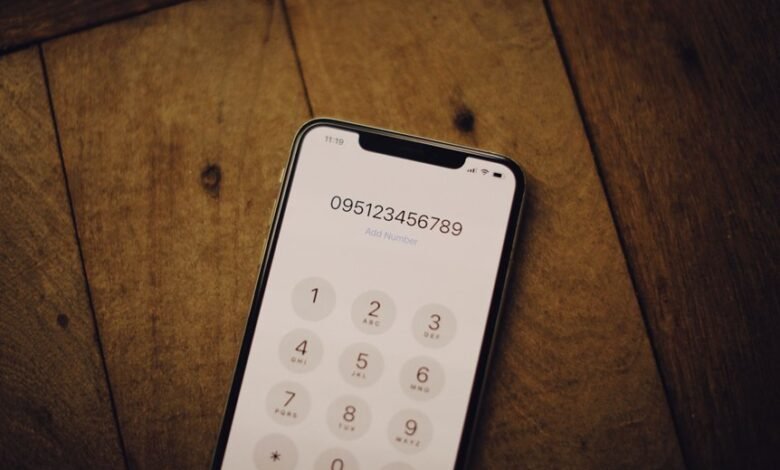
Phone number verification hinges on patterns, formats, and cross-border signals to weigh trust and privacy. The listed numbers illustrate how prefixes, length, and regional norms affect correctness and false positives. Variations in international formats demand consistent normalization, rate limiting, and robust retry policies. A methodical approach exposes trade-offs between usability and security, highlighting the need for governance, transparency, and reproducible benchmarks to scale verification while preserving privacy across contexts. This tension invites closer examination of underlying signals and policy choices.
What Makes Phone Number Verification Work: Core Concepts
Phone number verification hinges on a systematic chain of authentication signals that collectively reduce fraud risk while preserving user accessibility.
The approach models success as a function of layered checks, timing windows, and fail-safes, yielding measurable accuracy metrics.


Decoding formats and privacy trust are central: formats streamline verification, while privacy trust anchors user confidence and compliance in scalable, auditable processes.
Decoding Numbers: Patterns, Formats, and Why Some Prefixes Fail
Decoding numbers in verification systems hinges on identifying consistent patterns, standardized formats, and the factors that cause certain prefixes to underperform. The analysis treats sequences as variables, quantifies error rates, and maps prefix reliability against validation rules. It clarifies decoding formats, highlights prefix challenges, and supports patterns validation with metrics, thresholds, and reproducible tests, enabling objective comparisons and informed system tuning.
International Formats and Trust: Improving Accuracy and Privacy
International formats and trust frameworks influence verification accuracy and privacy by imposing standardized, cross-border conventions while preserving user confidentiality.
A quantitative assessment reveals cross-national resilience gains from uniform E.164 compliance, reduced false positives, and improved auditability.
However, international privacy concerns persist, with verification myths misrepresenting risk.
Rigorous benchmarking and transparent data governance are essential to sustain confidence and freedom in global number verification.
Practical Guidance: Strategies for Developers and Users to Optimize Verification Outcomes
Practical guidance for developers and users focuses on concrete, data-driven approaches to maximize verification accuracy and minimize false positives. Systematic experiments quantify impact of rate limits, retry policies, and multi-factor prompts. Metrics-driven benchmarks compare carrier reliability and time-to-verify. Iterative refinement reduces noise, enhances privacy, and preserves usability, delivering consistent verification outcomes across diverse contexts without overfitting to anomalies.
Frequently Asked Questions
How Do You Handle Phone Numbers With Multiple Country Codes?
Handling multiple country codes requires normalization to a canonical E.164 format, then verification attempts across carriers; failures are logged as Verification failures from carriers, with retry policies and statistical thresholds guiding subsequent remediation and user alerts.
Can Verification Fail Due to Carrier-Level Blocking or Spoofing?
Yes, verification can fail due to carrier-level blocking or spoofing; blocking reduces reach, while spoofing inflates risk signals. The analysis examines verification blocking, spoofing risks, country code handling, data retention limits, opt out mechanisms.
What Privacy Risks Arise From Sharing Phone Numbers Publicly?
Privacy risks include identity exposure and targeted profiling; data minimization reduces unnecessary leakage. Sharing numbers publicly increases consent fatigue, phishing susceptibility, and data linkability, while measurement of exposure remains essential for assessing risk and designing controls.
Are There Legal Limits on Data Retention for Verifications?
Legal limits on data retention vary by jurisdiction; generally, entities must minimize retention and align with verification timing. Data retention practices should be documented, time-bound, and subject to periodic review to balance security needs with privacy rights.
How Can Users Opt Out of Future Verification Requests?
Users may opt out via opt out mechanisms, and consent is recorded to minimize future requests; the process is governed by user consent, with adjustable preferences enabling reduced verification frequency and transparent activity logging for accountability.
Conclusion
Phone number verification hinges on standardized formats, cross-border conventions, and layered signals to balance accuracy, privacy, and trust. Decoding prefixes, timing windows, rate limits, and retry policies quantifies reliability and user impact. International formats enhance privacy and governance while exposing edge cases for refinement. For developers, reproducible benchmarks and data-driven metrics enable scalable auditing. Do diversified verification pipelines and transparent governance truly offer consistent trust across borders, or do residual ambiguities undermine perceived reliability at scale?